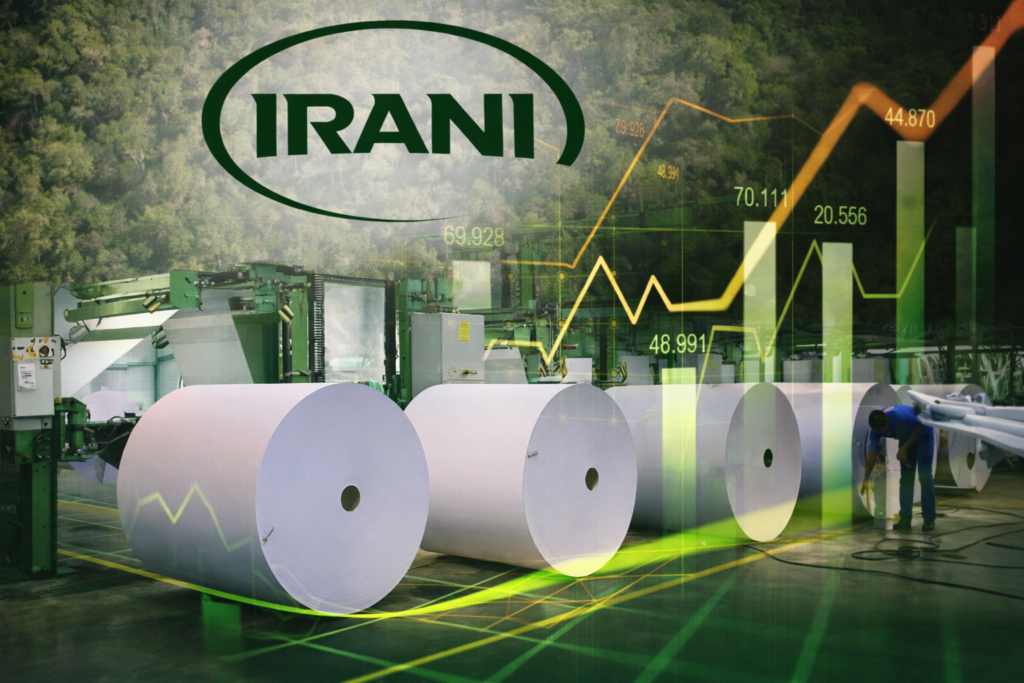
Irani (RANI3) 2025: Unpacking Strong EBITDA & Recurrent Profit Growth Beyond the Headlines
In the dynamic world of capital markets, initial headlines can often paint a misleading picture, and for Irani Papel e Embalagem (RANI3), the close of 2025 presented just such a scenario. While a quick glance might have startled investors with reports of a significant 79% drop in fourth-quarter net profit compared to the previous year, a deeper dive into the company's financials reveals a far more robust and positive narrative. Beneath the surface, Irani demonstrated impressive operational strength, marked by
strong EBITDA growth and a significant expansion of its recurrent profit. This article delves into the nuances of Irani’s 2025 performance, highlighting the underlying drivers of its operational success and reinforcing its position as a company with improving efficiency and a solid financial footing.
Understanding the 2025 Financials: Beyond the Headline Numbers
Irani (RANI3) reported a net profit of R$ 39.0 million for the fourth quarter of 2025, a notable decrease from the R$ 189.8 million recorded in the same period of 2024. This sharp decline, however, requires crucial context. The comparative base for Q4 2024 was significantly inflated by a substantial non-recurring event: a net tax credit of R$ 168.2 million. Without this extraordinary item, the comparison shifts dramatically, revealing a healthier trajectory for Irani's actual operational earnings.
Excluding these one-off effects, the picture changes entirely. The annual net profit for 2025 stood at R$ 242.1 million. What's more telling is the performance of the company's recurrent profit. When adjusted for these non-recurring items, Irani's operational recurrent profit showed expressive expansion, nearing 60% in certain comparative windows. For instance, the first quarter of 2025 already signaled a consistent improvement with net profit growing 36.8%. This distinction is vital for investors, as recurrent profit provides a clearer, more sustainable measure of a company's ongoing earning power, unmarred by transient boosts.
This emphasizes a critical lesson for investors: always look beyond the initial numbers. Extraordinary events, whether positive or negative, can significantly distort period-over-period comparisons. Focusing on adjusted figures and recurrent metrics offers a more accurate assessment of a company's fundamental health and performance trends.
Irani's Operational Prowess: The Power of EBITDA Growth and Efficiency
Despite the temporary dip in reported net profit, Irani’s operational strength shone brightly through its adjusted EBITDA (Earnings Before Interest, Taxes, Depreciation, and Amortization). In the fourth quarter of 2025, Irani’s adjusted EBITDA reached R$ 129.0 million, marking a robust 8.7% increase year-over-year. The full-year 2025 results were even more impressive, with adjusted EBITDA climbing to R$ 515.6 million, an advancement of 11.4% compared to 2024. This consistent and significant EBITDA growth at Irani (RANI3) is a testament to the company's improving operational efficiency and strategic focus.
Several factors underpinned this strong performance:
*
Dilution of Fixed Costs: As production volumes increase and operational processes are streamlined, fixed costs are spread over a larger output, reducing the per-unit cost and boosting profitability.
*
Improved Manufacturing Efficiency: Irani has clearly benefited from enhanced productivity in its facilities, likely a result of technological upgrades and process optimizations.
*
Higher Value Capture Per Tonne Sold: While the volume of corrugated cardboard sales saw a 6% decline to 42 thousand tonnes, average prices increased by a substantial 7%, reaching R$ 6,129 per tonne. This strategic move to prioritize profitability over mere volume indicates a disciplined market approach, focusing on higher-value products and customer segments.
*
Maturation of Investments: Past capital expenditures are now bearing fruit, contributing to increased production capacity and greater efficiency.
*
Positive Operational Leverage: The company's net revenue for the full year advanced approximately 6%, but the operational gain, as indicated by the impressive EBITDA growth, was superior. This "operational leverage" is typical for industrial companies that successfully amplify production while maintaining a significant portion of their fixed costs stable, leading to disproportionately higher operational profits.
The continuous expansion of Irani’s EBITDA margin further reinforces the structural gains in rentability. This means that for every real of revenue generated, a larger portion is being converted into core operational profit, signaling a more sustainable and healthy business model. The Q4 2025 net revenue of R$ 416.0 million, up 2% year-on-year, further underscores that the growth in Irani's EBITDA is not just about cost-cutting but also about effective revenue management and pricing power.
Strong Cash Generation and Financial Health
Beyond profitability metrics, Irani's financial health is further validated by its robust cash flow generation and improved leverage. The company concluded 2025 with a significantly strengthened cash position, growing from approximately R$ 600 million to an impressive R$ 839 million. This substantial increase in cash indicates:
*
Forte Conversion of EBITDA into Cash: Irani is not just generating accounting profits; it is converting those profits into tangible cash that can be utilized for growth and shareholder returns.
*
Capacity to Finance Investments: A healthy cash reserve empowers Irani to fund future strategic investments organically, reducing reliance on external debt or equity dilution. This autonomy is crucial for long-term growth and competitiveness.
*
Reduced Financial Risk: A stronger cash position acts as a buffer against market volatilities and economic downturns, enhancing the company's resilience.
*
Sustentation of Dividend Policy: Strong cash generation provides the foundation for consistent dividend payouts, rewarding shareholders and signaling financial stability.
Furthermore, Irani successfully reduced its financial leverage, a key indicator of financial risk, from 2.26 times in the previous year to 1.99 times. A lower leverage ratio means the company is less reliant on debt to finance its assets and operations, which is a positive sign for investors seeking stability and reduced risk. The Free Cash Flow Yield also reached an elevated level relative to market value, demonstrating that Irani generates cash proportionally above the average of many small-cap companies, making it an attractive prospect for value-oriented investors.
Conclusion: A Resilient Irani Poised for Sustainable Growth
The 2025 financial results for Irani (RANI3), while initially clouded by a headline-grabbing net profit drop, reveal a company on a strong operational footing. The clear distinction between recurrent operational performance and non-recurring extraordinary events is crucial for a complete understanding. Irani's ability to demonstrate consistent
EBITDA growth, expand its recurrent profit, prioritize profitability over volume, and significantly strengthen its cash position and reduce leverage, paints the picture of a resilient and strategically sound business.
Investors analyzing Irani (RANI3) should look past the superficial numbers and focus on these underlying trends. The company's enhanced operational efficiency, strategic focus on value, and solid financial health provide a compelling narrative for sustainable growth in the years to come. Irani is clearly executing a strategy that aims for long-term value creation, making it a noteworthy player in the pulp and paper packaging sector.